


{{key-takeaways}}
Quick Summary – Office Furniture Ideas at a Glance
Every effective home office starts with four essentials: a desk, a desk chair, lighting, and storage.
These elements form the foundation of a functional workspace. Without them, it is easy to create a room that looks good in inspiration photos but fails to support productivity.
The desk defines your work area. It is where your computer sits, where your to-dos are managed, and where most tasks take place. When choosing a desk, consider the legs for both stability and style, as mixing and matching desk components can enhance both function and appearance. Some people opt for a conference table as a versatile workspace solution, especially for meetings or collaborative tasks. Choosing the right desk ensures you can work comfortably without feeling cramped.
Your chair plays a critical role. Features like lumbar support, breathable fabric, and adjustable height help you sit properly and maintain focus.
Lighting – especially LED lights – improves visibility and reduces fatigue. A well-lit space helps you stay bright and alert.
Storage keeps everything organised. Whether it is shelves, drawers, or a book collection, having a place for your supplies prevents clutter from building up.
Desk Ideas That Match Your Space and Work Style
Choosing the right desk is one of the most important decisions when setting up a workspace. The goal is to match your furniture to your room, your tasks, and your style.
Measure your space carefully and consider how you will move around the room. Avoid pushing a desk into a tight corner where it limits access or makes the area feel cramped.
Think about your work. Once you have figured the best layout and organisation for your needs, managing multiple projects at your desk becomes much easier. If you use a computer heavily or handle several projects, you will need more surface area. If your work is lighter, a compact desk may suit you better.
Compact desks for laptops and light admin
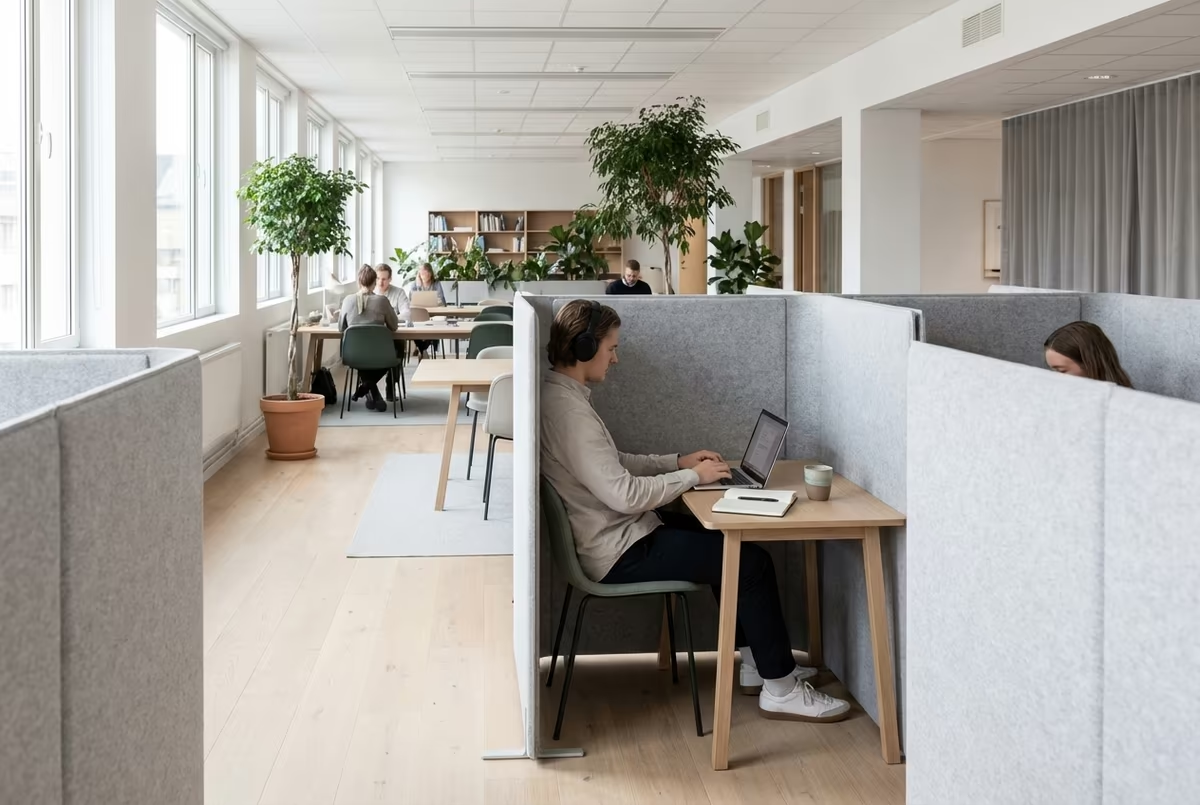
Compact desks are ideal for smaller rooms or a bedroom setup. They work well for light admin, emails, and planning. A compact desk is also perfect for jotting down a quick note or keeping note-taking supplies handy.
A slim desk allows you to create a functional workspace without taking over the room. Pair it with a supportive chair and keep essential items within easy reach.
Corner and L-shaped desks to maximise surface area
Corner desks and L-shaped desks help you maximise space and accommodate multiple tasks. These setups are useful for people working with multiple screens, documents, or creative tools. They also help separate different types of work within the same workspace. Use simple cable management solutions to keep everything organised and prevent clutter.
Desks with built-in storage to reduce clutter
Desks with built-in drawers or shelves help you add storage without needing extra furniture. This is especially useful in a small house or shared room, where space is limited. Keeping your desk clear improves focus and supports productivity. Built-in drawers are perfect for storing pens and other small office supplies, keeping everything organised and within easy reach.
Chair Ideas for Comfortable All-Day Work
A good desk chair supports your body and helps you stay comfortable throughout the day. It should also roll smoothly across your floor, allowing for easy movement and convenience in your workspace.
The chair features that matter most
Focus on features that improve comfort and function:
- Adjustable height
- Lumbar support
- Seat depth
- Armrests
- Breathable fabric
According to the Health and Safety Executive in the UK, proper workstation setup helps reduce strain and supports long-term wellbeing.
Chair picks that work in smaller rooms
In smaller spaces, choose chairs that are slim, lightweight, and easy to tuck under your desk. This helps maintain an open layout and prevents the room from feeling crowded.
Fast chair and desk adjustments for better posture
Quick adjustments can improve comfort:
- Align your elbows with your desk
- Keep feet flat on the floor
- Raise your screen to eye level
- Sit fully back in your chair
These simple changes improve posture and help you focus.
Desk Lamp and Lighting Ideas for Focus
Lighting is essential for maintaining focus and reducing fatigue.
How to choose a desk lamp
Choose a lamp with adjustable brightness and positioning. This allows you to direct light exactly where you need it. Avoid glare and shadows, especially when working on a computer or reading.
Layered lighting for dark corners and early mornings
Layered lighting combines task lighting with ambient light to create a balanced environment. Using LED lights in darker areas helps keep the room bright and comfortable. Research from the Sleep Foundation in the US shows that lighting affects alertness and performance – if your workspace is not well-lit, energy levels are naturally likely to dip.
Storage and Organisation Furniture Ideas
Storage is key to keeping your workspace organised and functional. You can fill your workspace with storage solutions and decor to enhance both function and style, making the environment more inviting and productive. Modular cabinets help maintain an uncluttered environment, which is essential for a focused workspace.
Vertical shelving and wall storage
Wall-mounted shelves help you use vertical space effectively. They are ideal for storing books, supplies, and decorative items without taking up floor space. This approach works well in a small room or home office.
Double-duty pieces: sideboards, console tables, and hidden storage
Furniture like sideboards and console tables can serve as storage while maintaining a clean, modern style. These pieces help you create a workspace that blends into your home rather than feeling overly professional.
Cable management and “hidden clutter” fixes
Cable management is essential for maintaining an organised workspace. Use clips, trays, or sleeves to keep cables tidy. This improves both safety and appearance.
Small Office Furniture Ideas for Tight Spaces
When space is limited, every piece of furniture needs to serve a clear function.
Ladder desks and slim desks that blend in
Ladder desks combine shelving and workspace into one compact unit. They are ideal for small spaces and shared rooms.
Pair a skinny desk with vertical shelving
This combination helps you maximise storage while keeping your work area clear. Store less-used items higher up and keep essentials within reach.
Combine desk and storage to save space
Desks with built-in storage reduce the need for additional furniture and help keep your setup organised.
Seating that tucks in to protect walkways
Choose chairs that can slide fully under the desk. This keeps pathways clear and improves convenience.
Layout Ideas That Make a Workspace Feel Bigger
A well-planned layout can make any workspace feel more open and functional. For more guidance, see our guide to workspace optimization.
Choose the best location: light, noise, distractions
Pick a space with good light, minimal noise, and easy access to supplies.
Create a clear work zone in shared rooms
Define your workspace using furniture, lighting, or a rug. This helps separate work from rest.
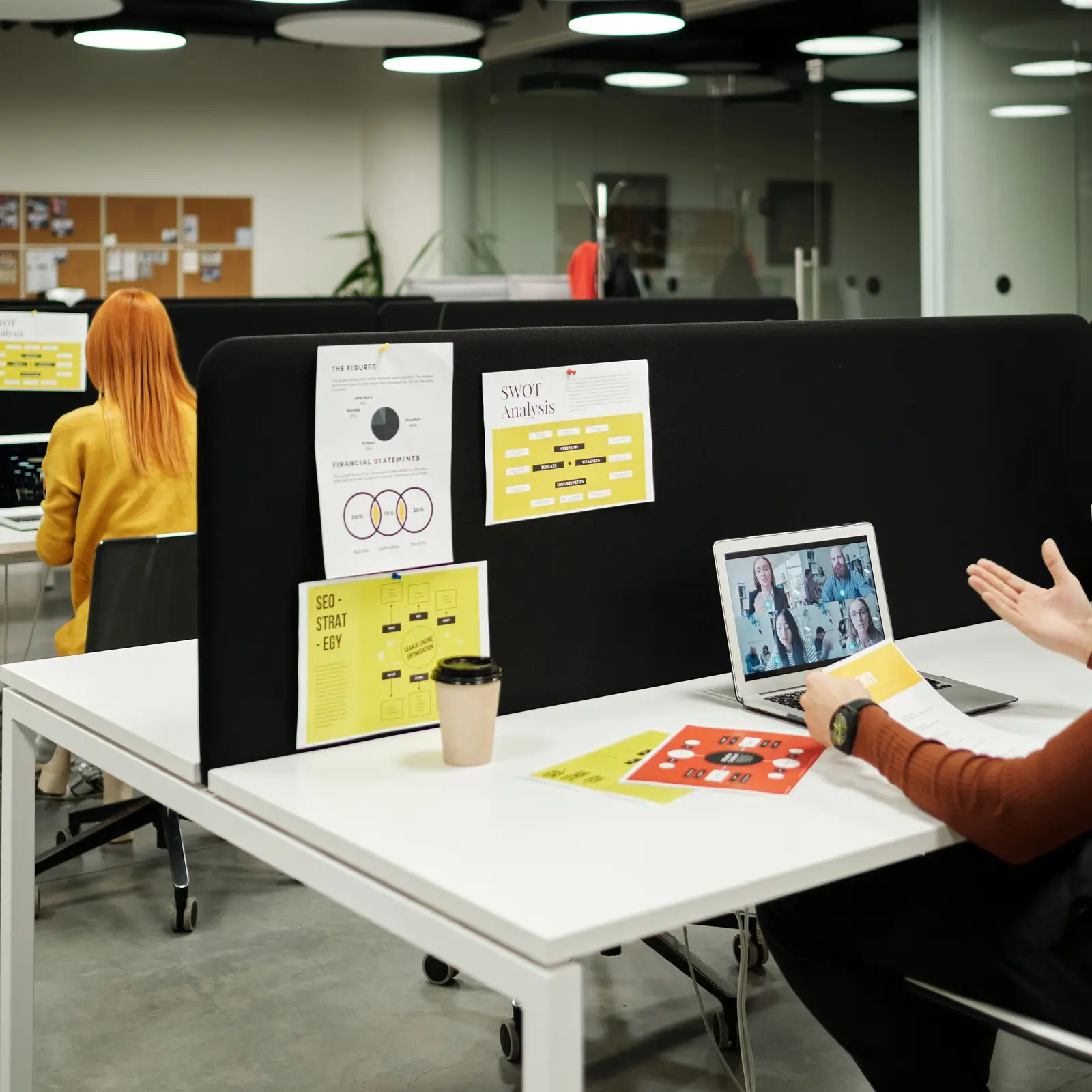
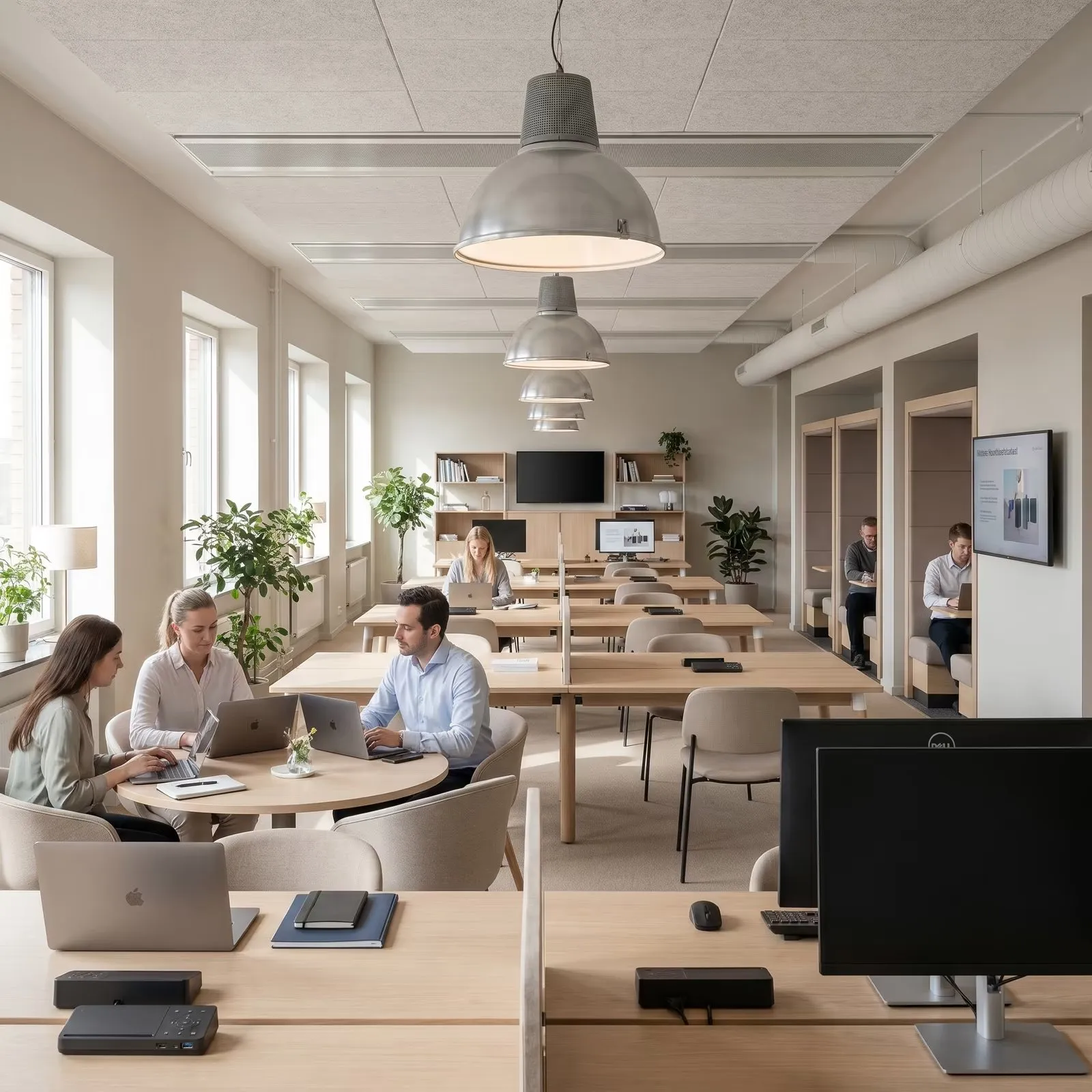
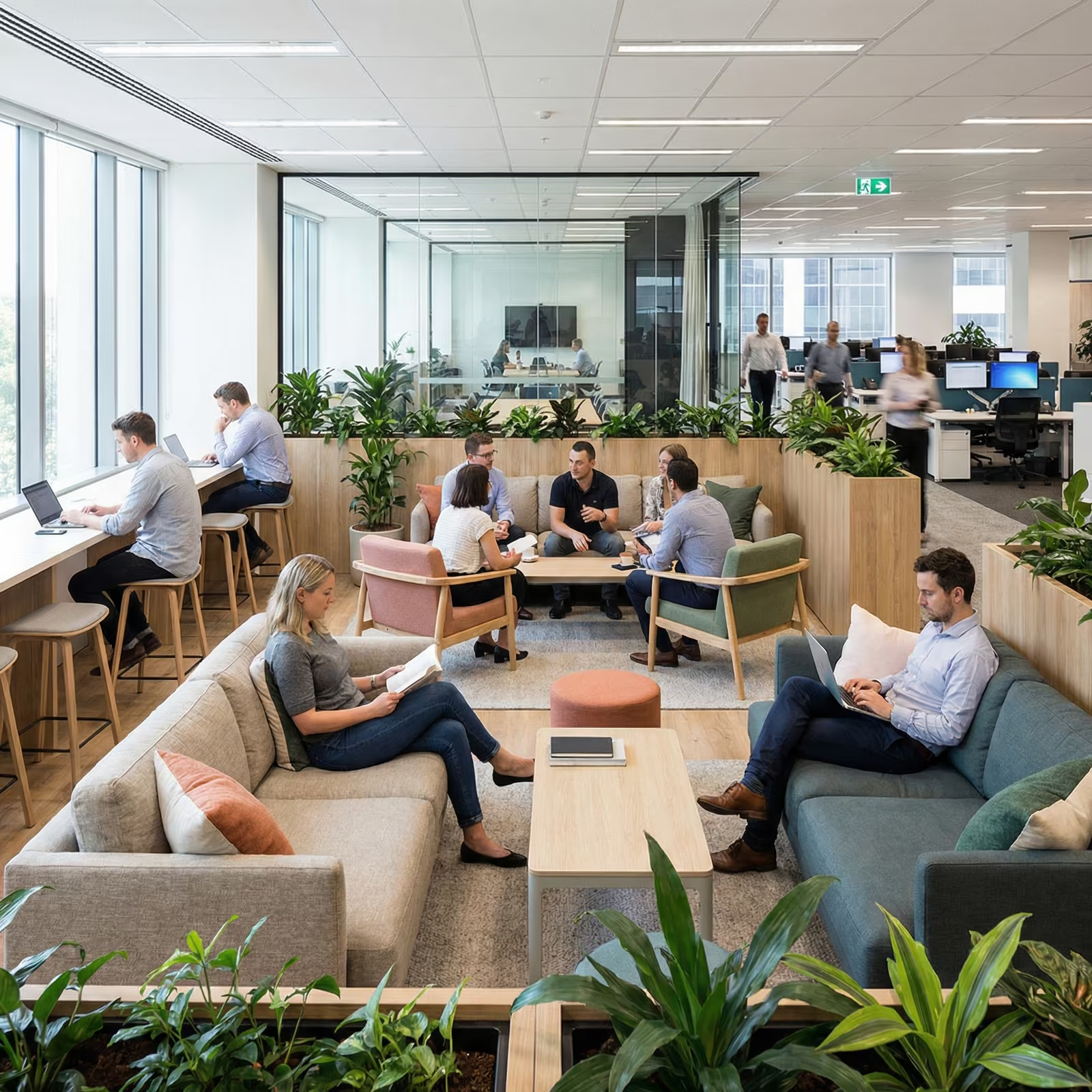
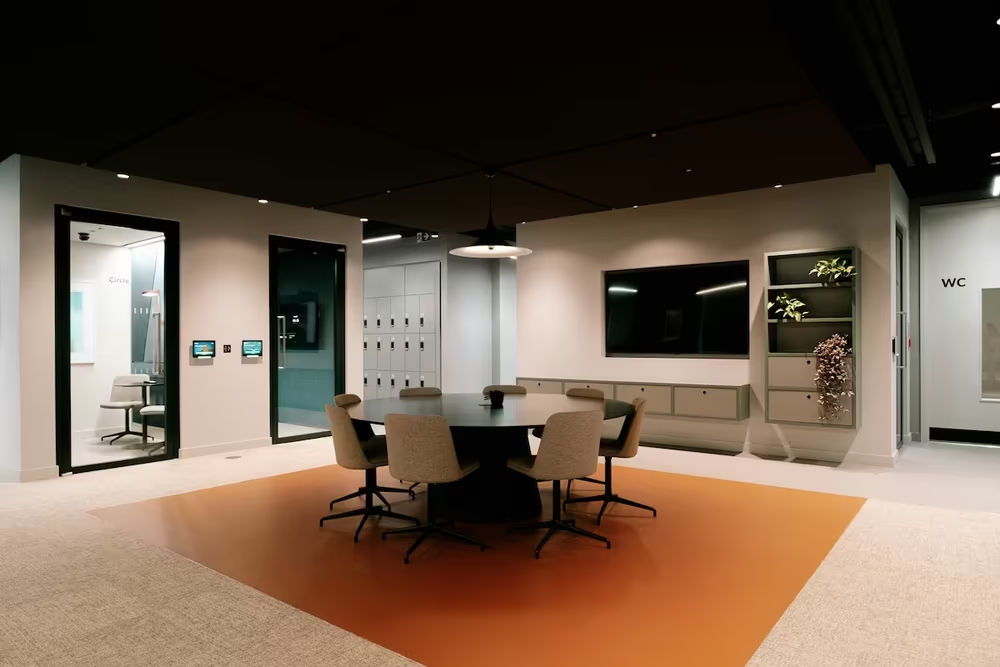
Reduce noise and add privacy in busy spaces
Noise affects focus and many offices use soft furnishings to absorb sound. Businesses are increasingly aware of the need to maintain acceptable noise levels in the workplace. This leads onto an entirely new consideration – the use of separate, modular office pods as workspace options...
Privacy and Focus Add-Ons That Feel Like Furniture
As modern work evolves, traditional setups are no longer enough to support productivity. Desks, chairs, and storage create the foundation of a workspace, but they do not solve one of the biggest challenges people face – noise, interruptions, and lack of privacy.
In both the office and the home office, people are expected to move between different types of work throughout the day. One moment you are focused on a task, the next you are on a call, and then collaborating with others. Without the right environment, this constant switching creates friction and reduces productivity.
This is why solutions like office pods are becoming a natural extension of the modern workspace. Rather than being treated as specialist add-ons, they are increasingly viewed as part of the core furniture mix – just like a desk, chair, or conference table.
According to the British Council for Offices, there is a growing demand for flexible workspaces that support both concentration and collaboration. This reflects a broader shift in how workspace design is approached.
But while many accept that office pods provide a simple and effective way to do this – creating dedicated areas for different types of work without needing to redesign the entire room – there is more than one kind of pod to choose from.
A phone booth for private calls and video meetings
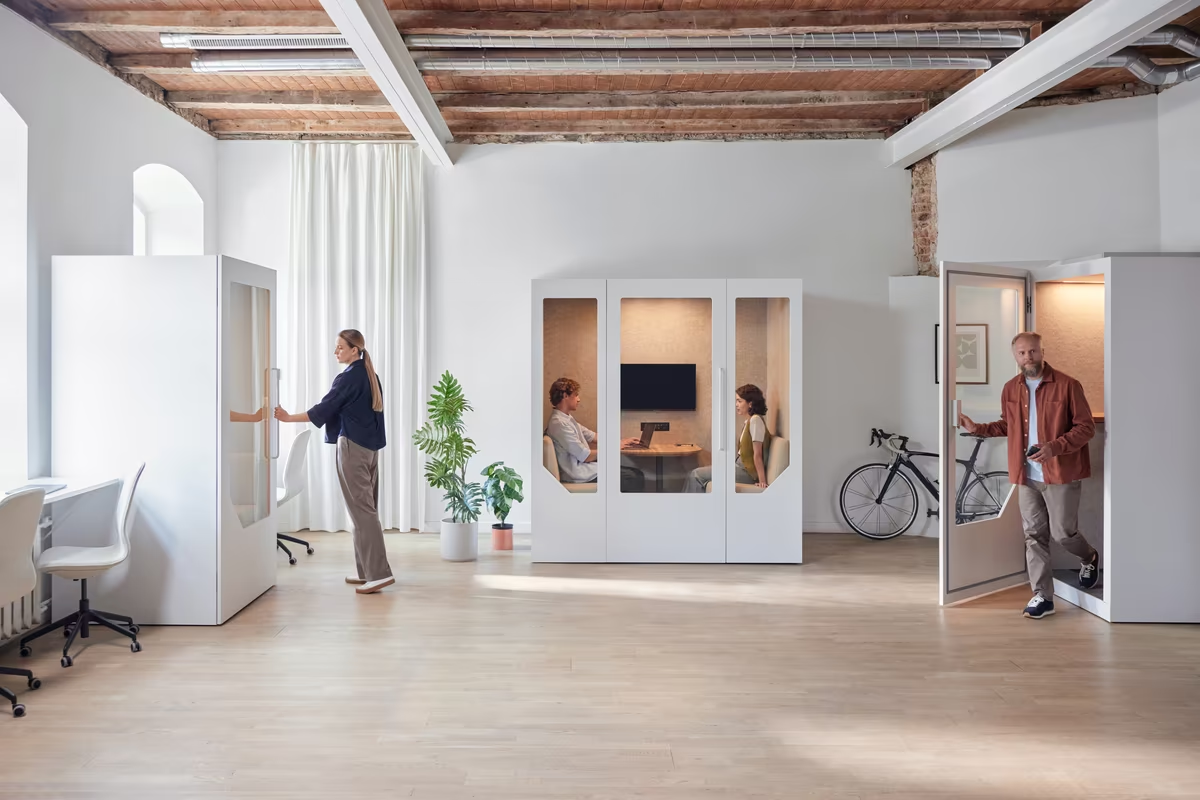
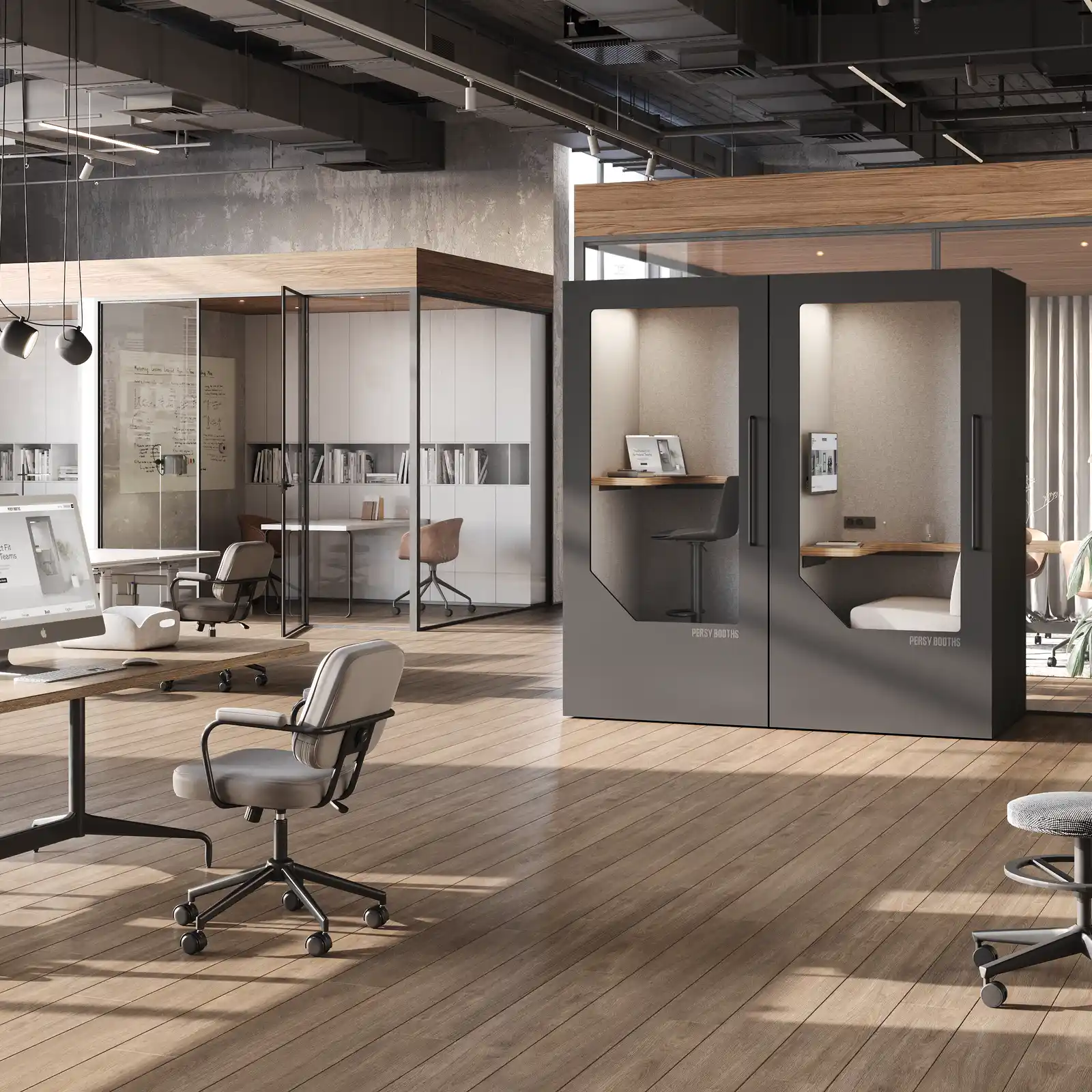
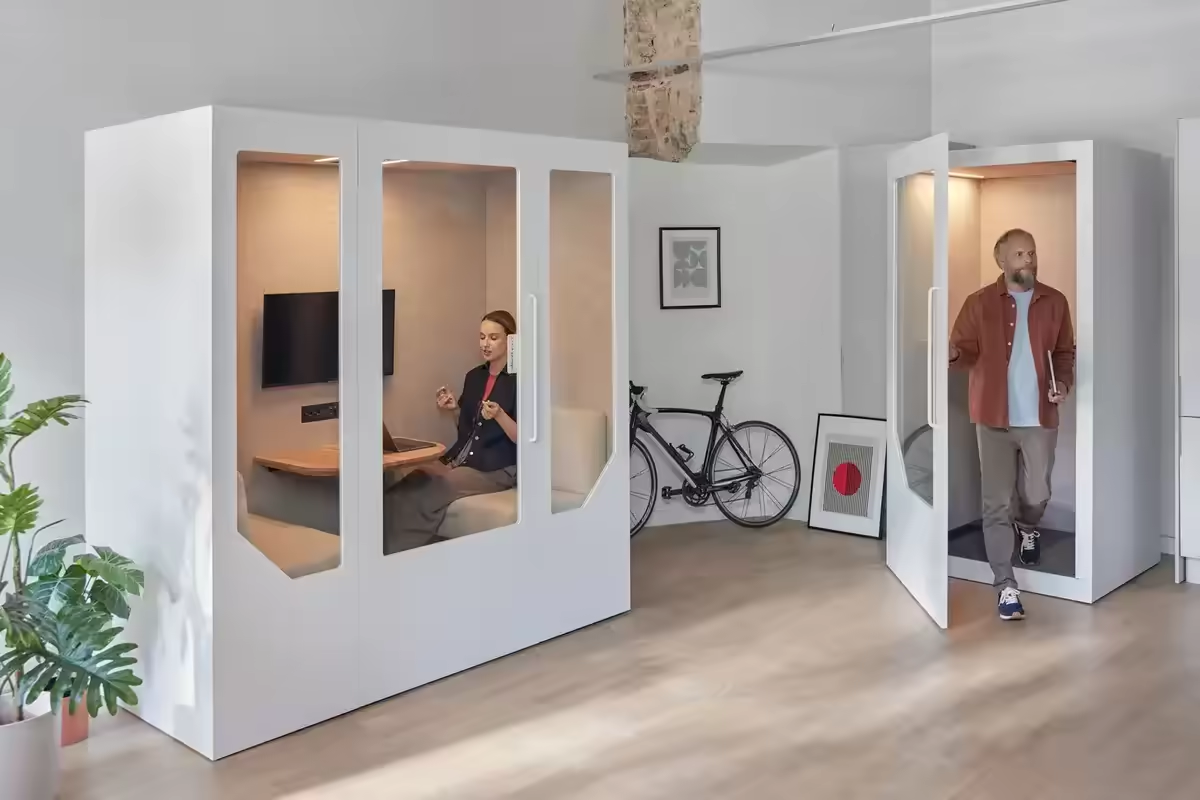
A soundproof phone booth is designed for one person and is ideal for short, focused tasks such as phone calls, video meetings, or quick check-ins. These booths are typically used for shorter periods. Many include a standing or perch-style setup, which encourages efficient use and quick turnover in busy environments.
In practical terms, a phone booth solves a very specific problem – where do you take a call without disturbing others, and without being distracted yourself? In open-plan spaces or shared rooms, this is often the biggest barrier to maintaining focus.
Think of the phone booth as a high-efficiency, short-duration solution – ideal for calls, quick meetings, and moments where clarity matters.
A dedicated focus pod for deep work
A work booth is designed for longer, more immersive periods of concentration. Unlike a phone booth, this is a seated environment with enough space to work comfortably for extended sessions.
The key difference is duration and depth of work. While a phone booth supports short bursts of activity, a work booth is built for sustained focus – writing, planning, analysing, or working through complex tasks. This type of environment creates a clear boundary between your workspace and the surrounding area, making it easier to concentrate.
In simple terms:
- Phone booth – short tasks, calls, quick use
- Work booth – longer sessions, deep focus, sustained productivity
A two-person booth for focused conversations
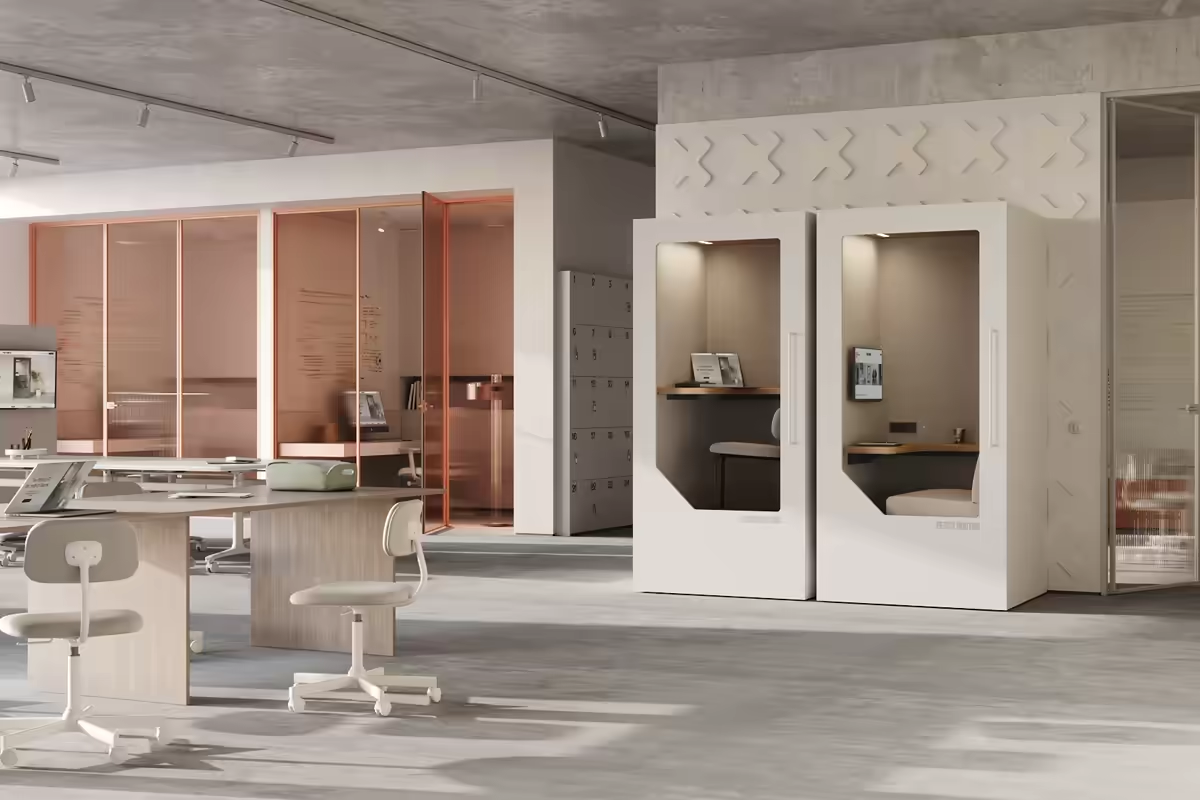
A two person phone booth – such as our own Persy Two – is designed for one-to-one conversations and small, focused meetings. This fills an important gap between individual booths and larger meeting spaces. It allows two people to talk privately without needing to book a full meeting room or use a large conference table.
These booths are ideal for:
- One-to-one meetings
- Manager check-ins
- Interviews
- Quick collaboration sessions
They offer acoustic privacy and a more comfortable, dedicated environment for conversation, helping both participants stay focused and engaged.
In many workplaces, this is one of the most common use cases – frequent, short meetings between two people that need privacy but do not justify a larger space.
A meeting pod for collaboration and team sessions
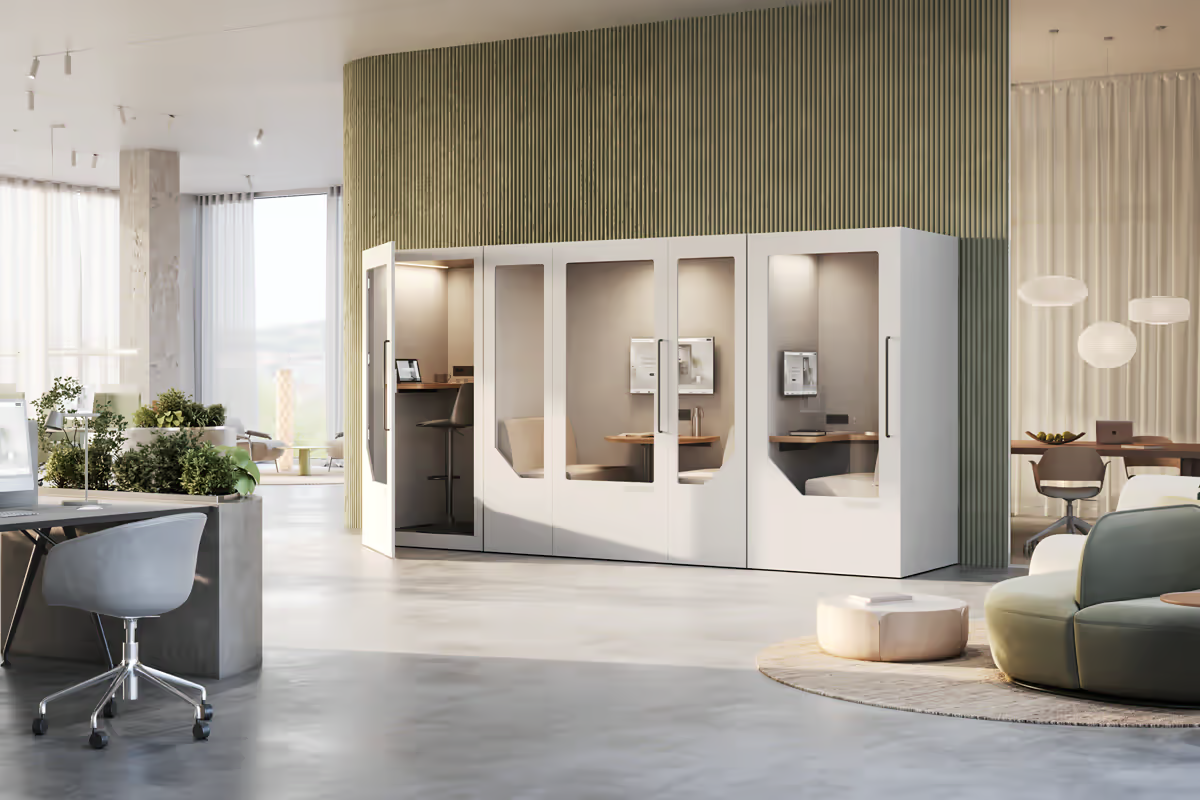
For situations that involve more people, a larger solution such as a meeting pod – like the Persy Four – provides a flexible alternative to traditional meeting rooms. These pods are designed to accommodate small groups, typically two to four people, and are ideal for:
- Team discussions
- Client meetings
- Collaborative project work
- Small group sessions
One of the biggest challenges in many offices is that large meeting rooms are often underused, while smaller meeting spaces are in constant demand. Meeting pods address this by offering a more efficient, right-sized solution.
They provide:
- Acoustic privacy for conversations
- A defined, professional meeting space
- Better use of available space
- A comfortable setting for collaboration
Bringing it all together: choosing the right option
Together, these options form a complete system within your workspace:
- Phone booth – quick, private calls and short tasks
- Two-person booth (Persy Two) – focused one-to-one meetings
- Work booth – individual deep work and longer sessions
- Meeting pod (Persy Four) – collaboration and small team meetings
Rather than replacing traditional setups, these solutions extend them. They allow your workspace to adapt to different types of work throughout the day – something desks and chairs alone cannot achieve.
This is why pods are increasingly seen as a core part of workspace planning. They solve real problems around noise, privacy, and focus, helping you create a more flexible, functional environment that truly supports how people work today.
Technology and Productivity Furniture Ideas
In today’s modern home office, integrating technology with your office furniture is key to creating a workspace that is both functional and productive. The right combination of tech and furniture can help you stay organised, focused, and efficient – whether you’re working from a dedicated room or carving out a nook in your house. Here are some practical home office ideas to help you create a workspace that supports your workflow and boosts productivity.
Integrating charging stations and cable management
A clutter-free workspace is essential for maintaining productivity and focus. Office furniture with built-in charging stations and cable management features can make a big difference in keeping your home office organised. Look for desks that offer integrated USB ports, power outlets, and cable organisers – these features allow you to keep your computer, phone, and other devices charged without messy cords taking over your work area. Some modern desks even include wireless charging pads, making it easy to power up your devices while you work. By choosing office furniture designed with technology in mind, you can create a workspace that looks tidy, feels professional, and helps you stay focused on your tasks.
Monitor arms, laptop stands, and tech-friendly desks
Ergonomics are a top priority in home office design, especially if you spend long hours at your desk. Monitor arms and laptop stands allow you to position your screens at the perfect height, reducing neck and eye strain and helping you maintain good posture. Tech-friendly desks with features like built-in keyboard trays or adjustable height settings – such as a standing desk – let you switch between sitting and standing throughout the day, supporting both comfort and productivity. When planning your home office, consider investing in a desk that accommodates your technology needs and supports a healthy, efficient workflow.
Smart accessories for workflow efficiency
Smart accessories can transform your home office into a truly functional and efficient workspace. A smart whiteboard or digital notepad lets you capture ideas and to dos, then sync them to your computer or share with clients and colleagues. LED desk lamps with adjustable brightness ensure your workspace is always well-lit, supporting focus and reducing eye fatigue. A high-quality desk chair with lumbar support is essential for comfort during long work sessions, while a document scanner helps you digitize paperwork and keep your workspace organised. By adding these smart accessories to your office setup, you create a workspace that not only looks modern but also supports your productivity and creativity every day.
Finishing Touches That Make the Setup Feel Good
Add finishing touches to improve comfort and style:
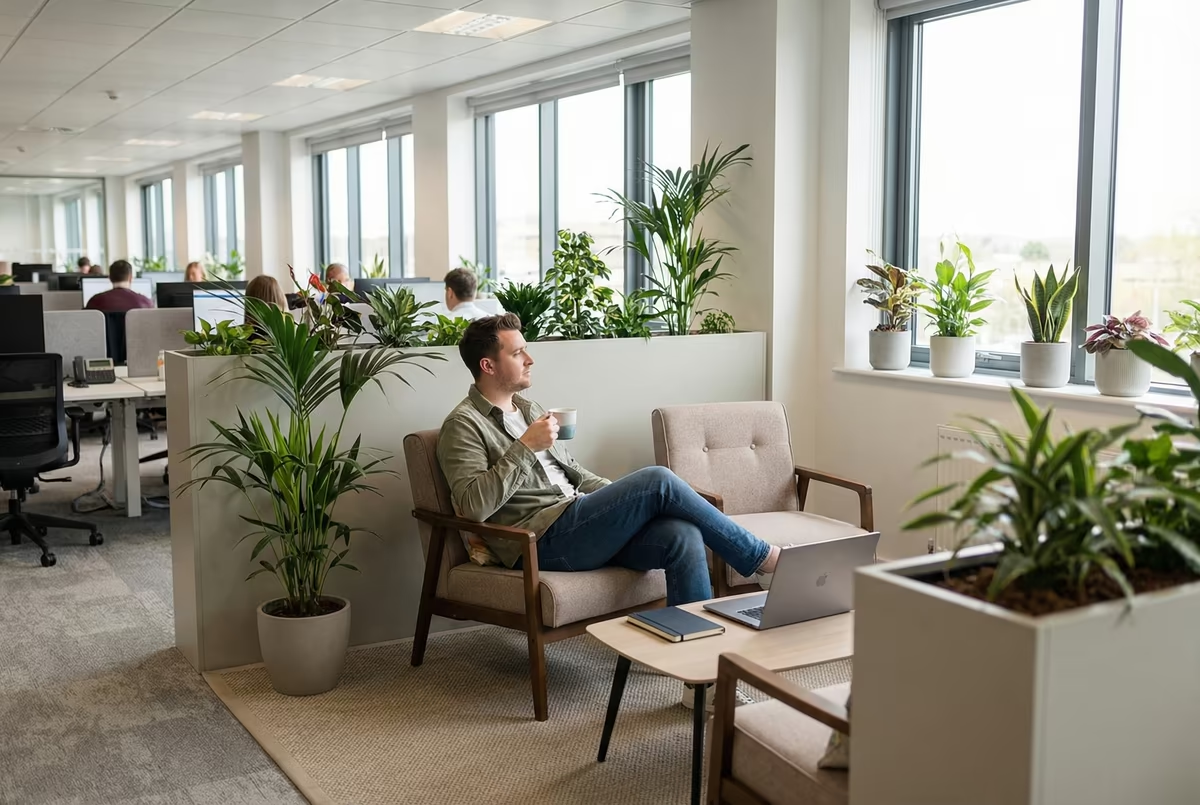
- Plants to bring life into the space
- Blue walls for a calm atmosphere, or use bold paint colours and textures to create an inspiring atmosphere
- Personal pictures and decor: Incorporate personal items like photographs, souvenirs, and even create a photo gallery for daily inspiration
- Unique decor elements and functional decor such as bulletin boards or whiteboards to enhance organisation and creativity
- Include books, artwork, and a small library to personalise your workspace and maximise storage and display options
- Colourful, personalised desktop organisers add personality while keeping your desk tidy
- Vertical gardens, planter dividers, or natural textures can enhance mental well-being in your office
- Choose furniture with scratch-resistant finishes for long-lasting durability and appearance
- A dedicated room for your office can help shelve household distractions and improve focus
Push your creativity and don't be afraid to experiment with finishing touches that make your workspace truly your own. These details help create a workspace that supports both function and creativity.
Buying Checklist: What to Measure and Compare
Before you shop, consider:
- Room size and layout
- Desk dimensions
- Chair support and adjustability
- Storage needs
- Materials and durability
- Assembly and convenience
Taking time to plan helps you save money and avoid mistakes.
{{summary}}

- The four essentials – desk, chair, lighting, and storage – create a functional work area
- Matching your desk to your room and tasks improves comfort and reduces clutter
- Ergonomic seating with lumbar support supports long-term health
- Lighting and LED lights directly affect focus and energy
- Smart storage helps keep your workspace organised and efficient
- Privacy solutions are becoming a core part of modern workspace design

- The four essentials – desk, chair, lighting, and storage – create a functional work area
- Matching your desk to your room and tasks improves comfort and reduces clutter
- Ergonomic seating with lumbar support supports long-term health
- Lighting and LED lights directly affect focus and energy
- Smart storage helps keep your workspace organised and efficient
- Privacy solutions are becoming a core part of modern workspace design
- The four essentials – desk, chair, lighting, and storage – create a functional work area
- Matching your desk to your room and tasks improves comfort and reduces clutter
- Ergonomic seating with lumbar support supports long-term health
- Lighting and LED lights directly affect focus and energy
- Smart storage helps keep your workspace organised and efficient
- Privacy solutions are becoming a core part of modern workspace design